The Frame
An engineered aluminium structure that carries the build. Fast to assemble on site, which matters when the build-up window is short.
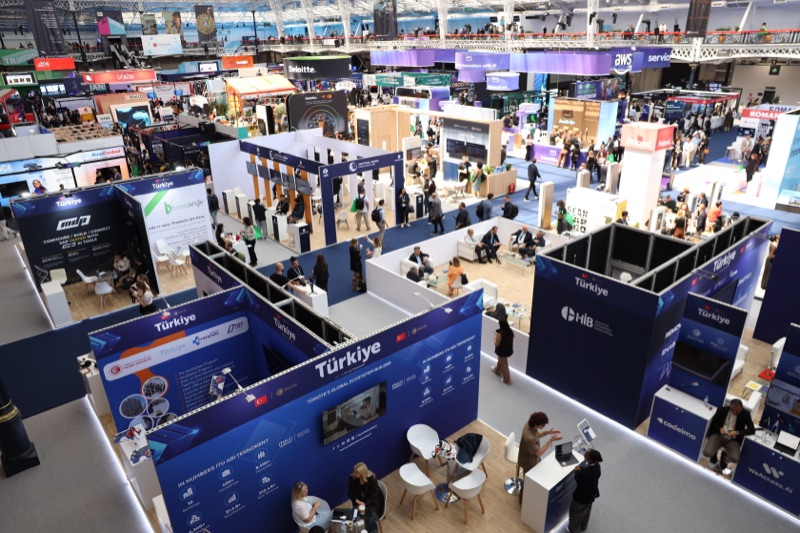
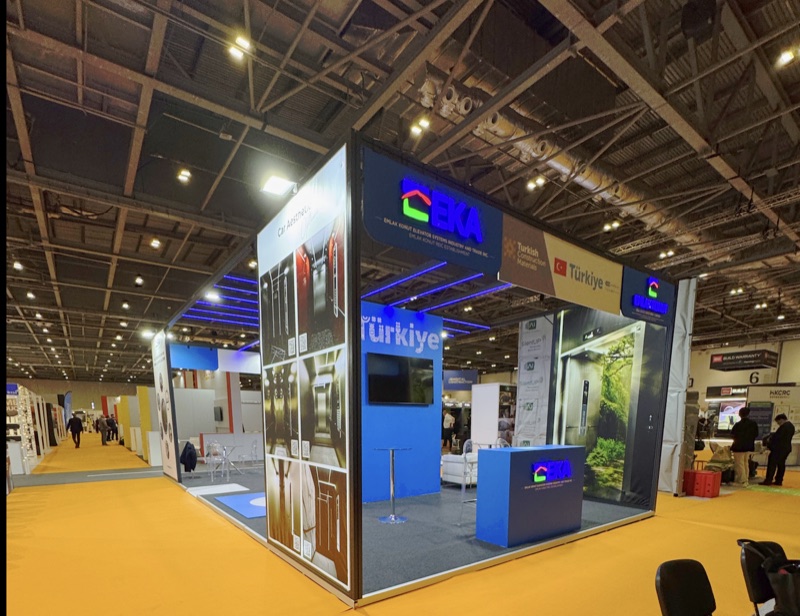
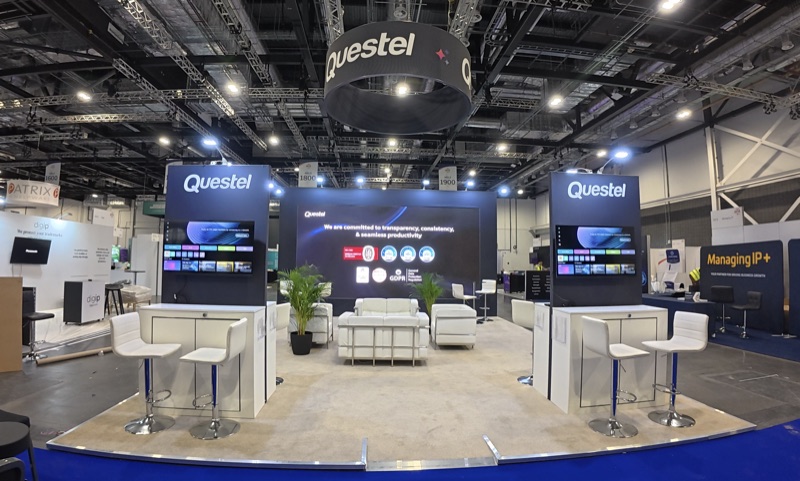
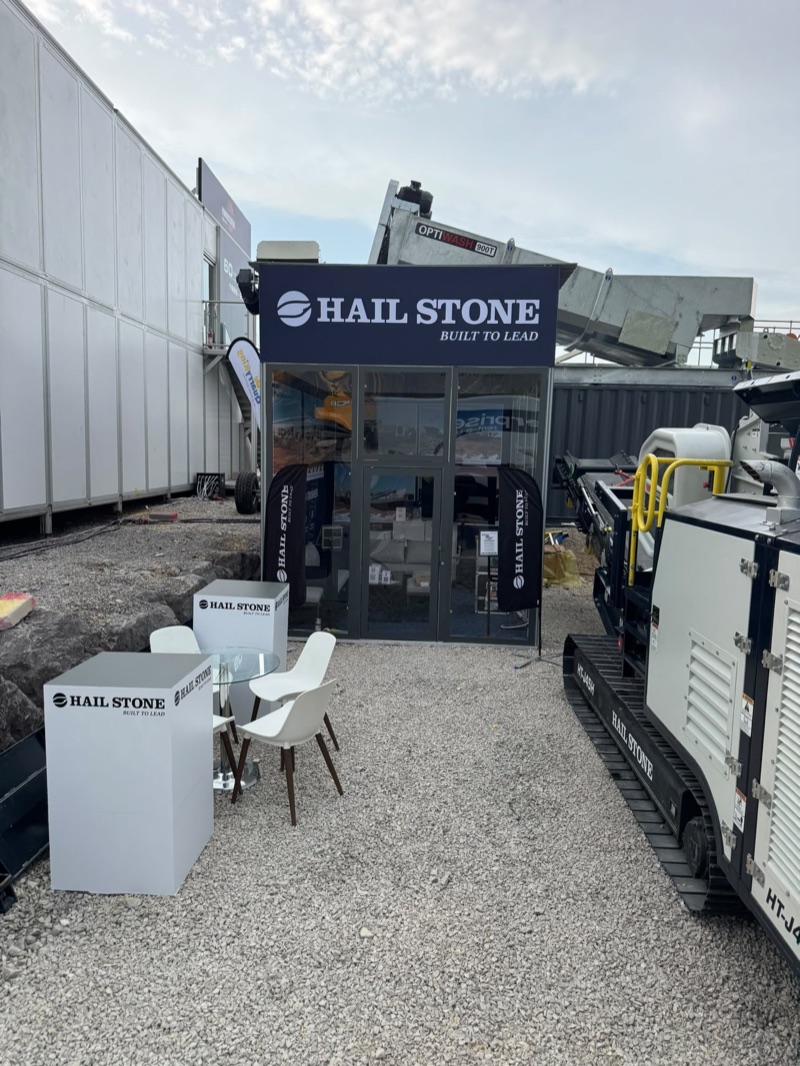
Modular exhibition stands for UK and European shows, built on DUM FLEX™: our engineered aluminium frame, seamless SEG fabric graphics tensioned over it, and custom wooden elements wherever the design asks for them. Stands built on it include a 450 m² startup pavilion at London Tech Week, 54 m² for Questel at ExCeL, 45 m² for EKA Elevator at UK Construction Week, 18 m² for Bren Power at the NEC and a 54 m² outdoor stand at Hillhead. The frame comes back to our stock after the show; what people see is your brand, not the kit holding it up.
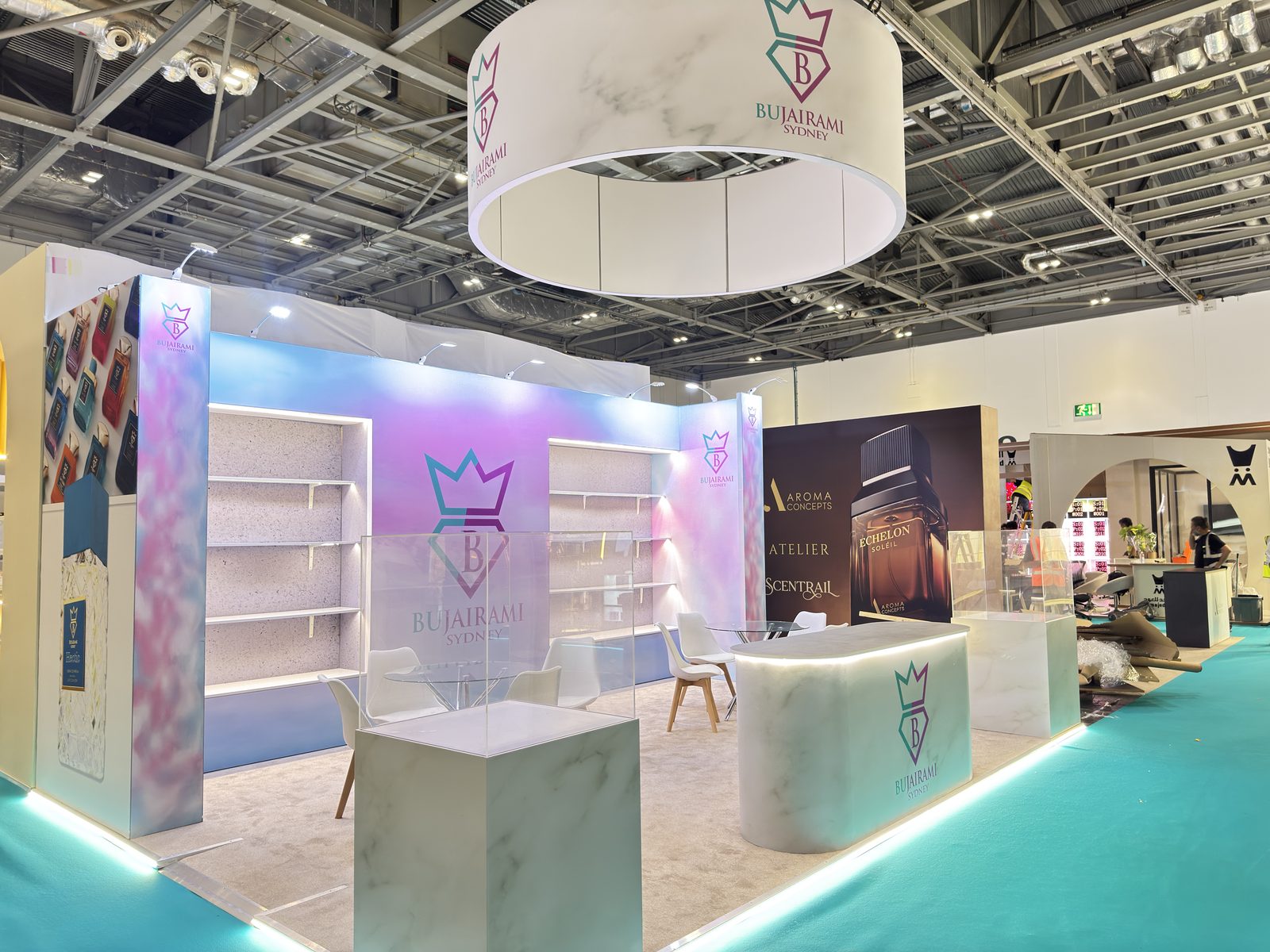
The structure is an engineered aluminium frame. Over it goes seamless SEG fabric graphics: high-resolution print tensioned into the frame so the profiles and joints recede behind the image rather than dividing it into panels.
Then it stops being purely modular. Wooden counters, décor elements, composite panels, integrated lightboxes and LED get built into the same stand wherever the design needs them. That hybrid layer is what separates DUM FLEX™ from a system stand out of a catalogue.
Price follows the specification, not the category. A heavily specified DUM FLEX™ build can cost more than a simple bespoke one. What it gives you is a different balance: faster on-site assembly, a structure that goes back into stock instead of into a skip, and graphics that carry the whole visual load — see how that plays out across real projects on our sustainable exhibition stands page.
If your show needs shapes a frame cannot hold, we will tell you that and point you at bespoke exhibition stands instead.
A modular exhibition stand is built on a reusable frame system rather than constructed from scratch for one show. The frame carries the structure, the graphics carry the look, and both come apart at the end of the show and go back out again. That is the whole idea: the parts that do the work are engineered once and used many times, and the parts that carry your brand are printed fresh whenever the message changes.
Where it differs between suppliers is how far the system will bend. A catalogue stand gives you the shapes the catalogue holds. Custom modular exhibition stands start from your design rather than a catalogue page, and develop it through the frame, with custom wooden elements, lightboxes and screens built in where the design asks for them. That is the version we build, and it is why a DUM FLEX™ stand rarely looks like a system stand once it is up.
A reusable modular stand makes the most sense in three situations: a short tenancy where assembly time decides whether you open on schedule, a calendar with several shows a year where the same structure earns its keep more than once, and a stand that needs to grow or shrink to fit different plots. The design starts from those constraints. That is why we ask about your show calendar before anyone draws anything.
We design and build modular exhibition stands in London and across the UK, and deliver into Europe and the Middle East from the same team.
Each layer is decided per project. Nothing here is automatic: what the stand gets depends on the brief, the venue and the budget.
An engineered aluminium structure that carries the build. Fast to assemble on site, which matters when the build-up window is short.
High-resolution fabric tensioned into the frame edge, so the image reads as one surface instead of a grid of panels.
Custom wooden counters, shaped décor, composite panels and storage, made to measure and built into the same structure.
Integrated lightboxes, LED walls and project-specific lighting planned into the frame from the start.
After the show the frame returns to our stock and goes out again on another project. A reusable structural system leaves less single-use timber waste than an equivalent one-off construction.
Double-deck and raised configurations on a frame base. We produce the structural calculations and take them to the venue with the drawings, and you hear early if the hall's height rule is going to shape the design.
This is the part most system stands are vague about, so here it is plainly.
DUM FLEX™ is a stand delivery service, not a system you buy. The frames are Dum Event stock. They come out for your show, they go back afterwards, and they are inspected before they go out again.
If your next stand keeps the same dimensions and the same artwork, the SEG graphics can often go out again after inspection. That is a project-by-project answer rather than a promise, because a changed layout usually means changed panel sizes.
The frame is the same in every hall; the rules around it are not. Each venue sets its own limits on height, rigging and vehicle access, and a modular stand has to be drawn to them before the first case is packed. These are the UK venues we build DUM FLEX™ stands at most often, with the pages that cover what each one asks for:
Exhibiting in London more broadly? Our London page covers the city's venues side by side, and the UK trade show calendar lists every show by venue and date.
Yes. We work to the show, not to a postcode: ExCeL London, the NEC, Olympia and the regional halls all run on their own manuals and vehicle rules, and we read the one you have been issued. The build is produced off site and delivered into your booked slot, with our project manager in the hall for the build and the breakdown.
That is the point of the SEG layer. The fabric is tensioned into the frame edge so the graphics read as one continuous surface and the profiles recede behind them. Final details depend on the design, the interfaces and the technical requirements, so we show you exactly how it resolves at concept stage, with the detail drawn.
No, and that is deliberate. DUM FLEX™ is a delivery service rather than a kit you buy. The frame system stays in our stock and returns to it after the show, which means no storage bill, no maintenance cost and no pressure to reuse a layout that no longer suits you. If your next stand keeps the same dimensions and artwork, your SEG graphics may be reusable after inspection.
Not automatically. Neither approach is the budget version of the other. A heavily specified DUM FLEX™ build with large LED and a full hybrid layer can cost more than a simple bespoke one. What changes is where the money goes and how the build behaves on site. We cost the project, not the category.
Often, but it usually needs adapting. A design drawn around custom wooden construction assumes shapes and junctions a frame system handles differently. We review it, tell you what would change and what it would gain, and let you decide before anything is committed. If the design really depends on those shapes, bespoke is the honest answer and we will say so.
The frame is a reusable structural system, so a DUM FLEX™ build leaves less single-use timber waste than an equivalent one-off construction. We will not put a generic percentage or carbon figure on that. The saving is specific to your programme, the shows you attend and how often the frame goes back up, so it belongs in your numbers rather than in a headline.
Send the brief, the space and the budget. You get a free 3D concept, a properly costed proposal and one project manager accountable from first sketch to final dismantle.
Start Your DUM FLEX™ Project →