Sustainable Exhibition Stands, Built to Come Back
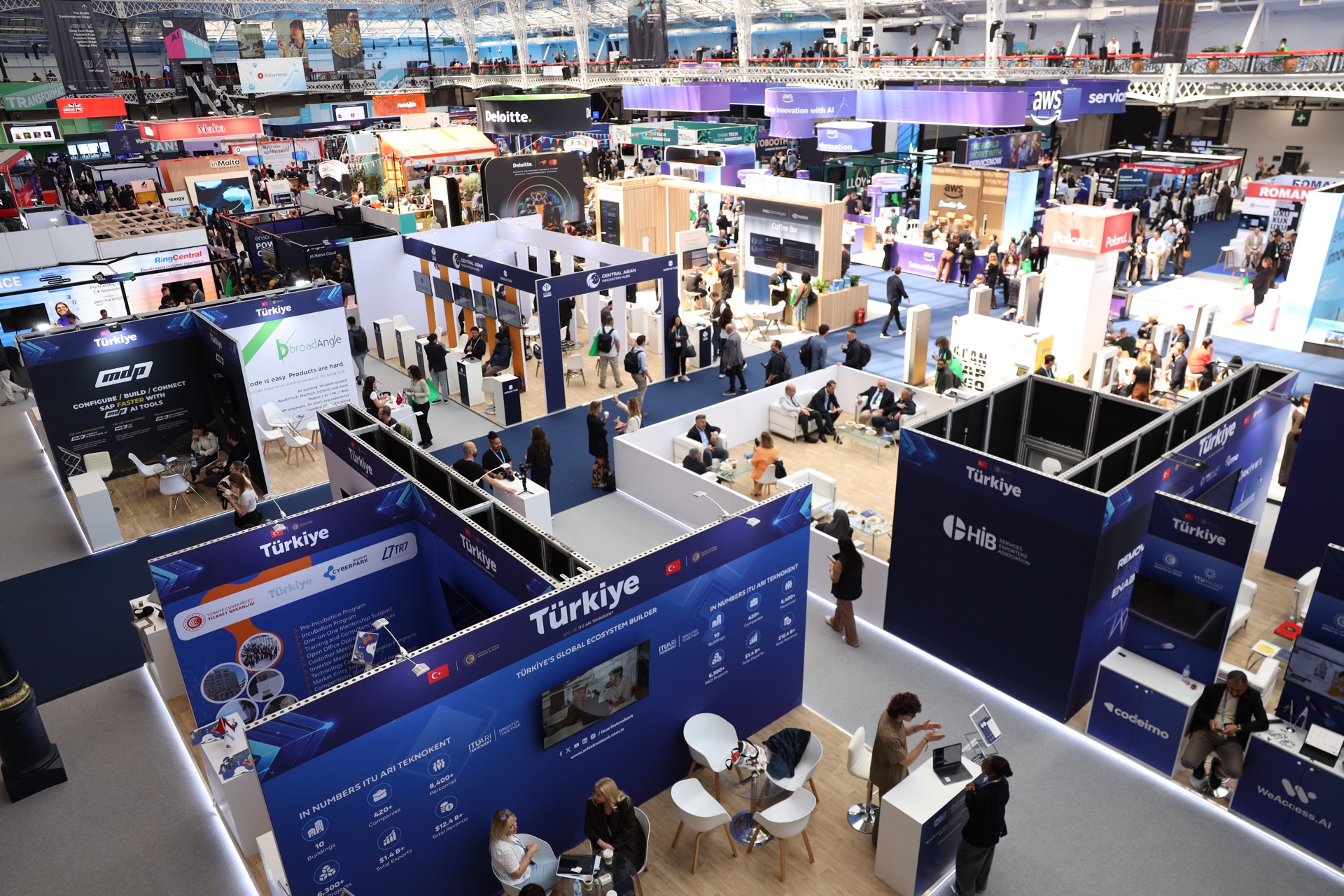
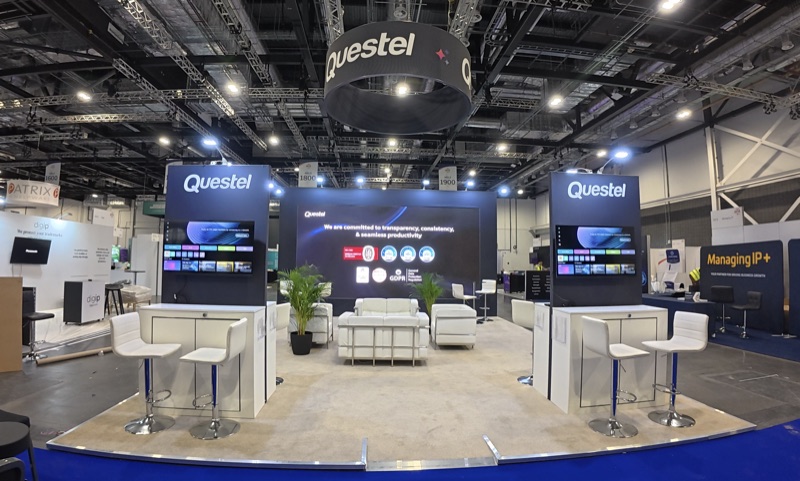
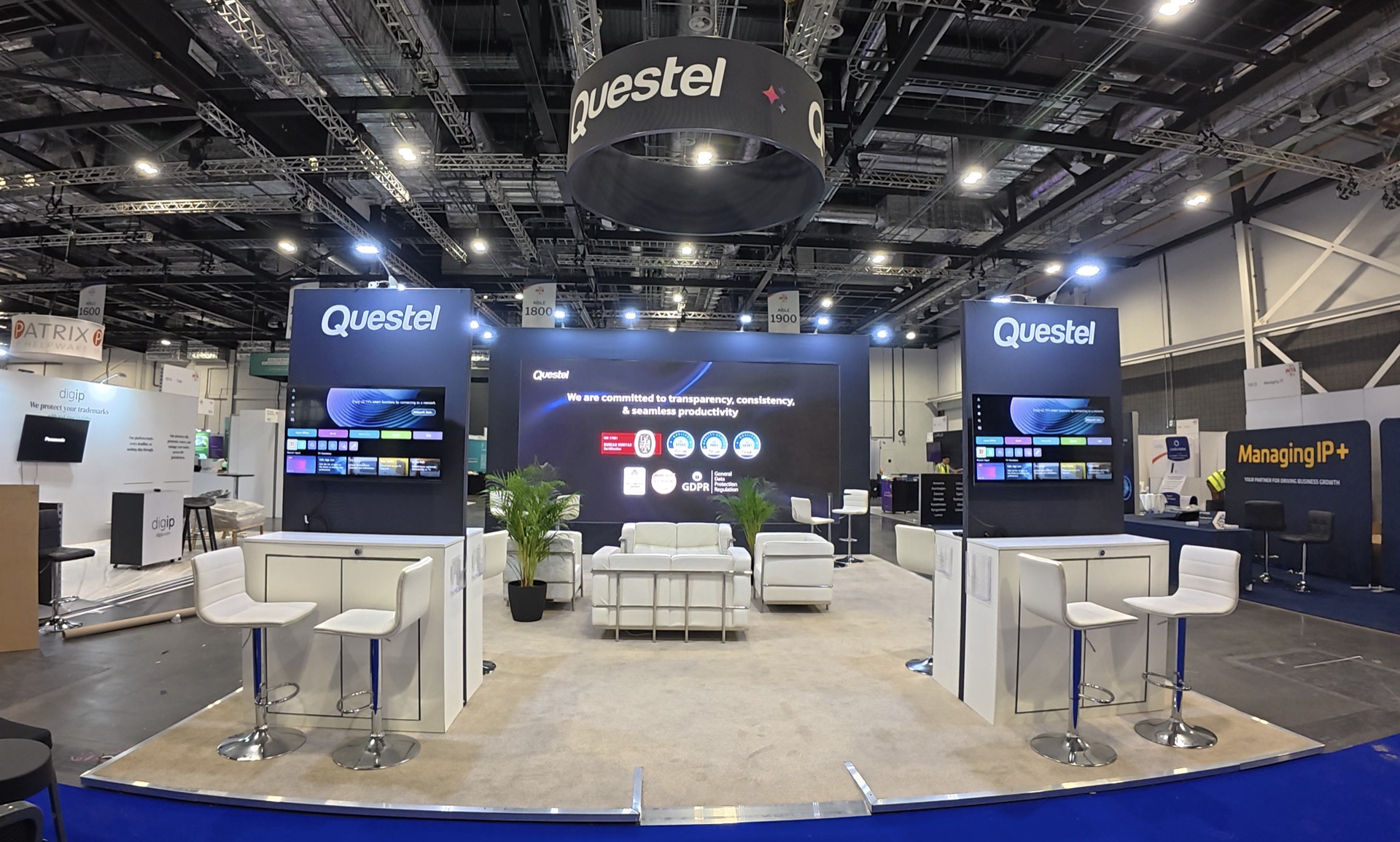
We build exhibition stands around reuse rather than replacement: a DUM FLEX™ aluminium frame that returns to our stock once a show closes, SEG fabric graphics that can go back up for the right brief, and production kept close to the venue. Government of Türkiye's 450 m² pavilion at London Tech Week and Questel's 54 m² stand at the INTA Annual Meeting were both built this way, and a bespoke wooden stand gets a planned dismantle from the same first conversation.
Talk about your brief →DUM FLEX stands running on a frame that goes out again
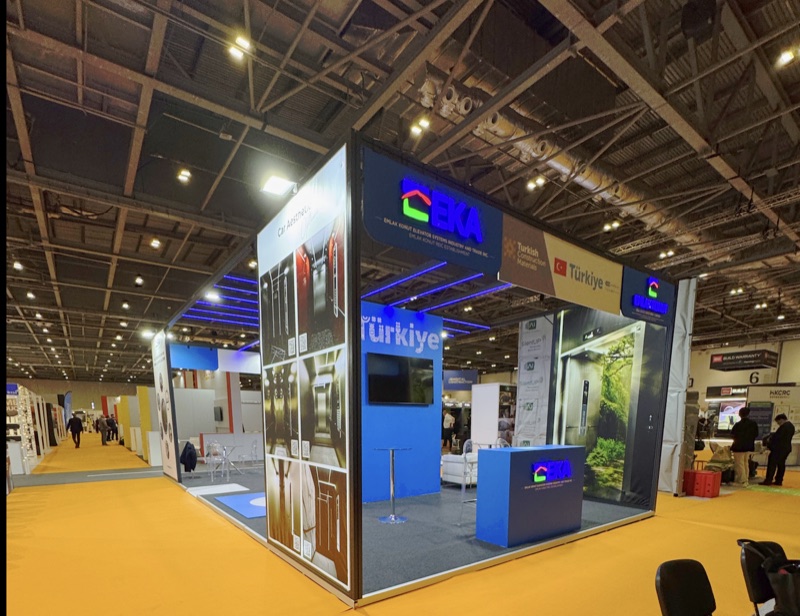
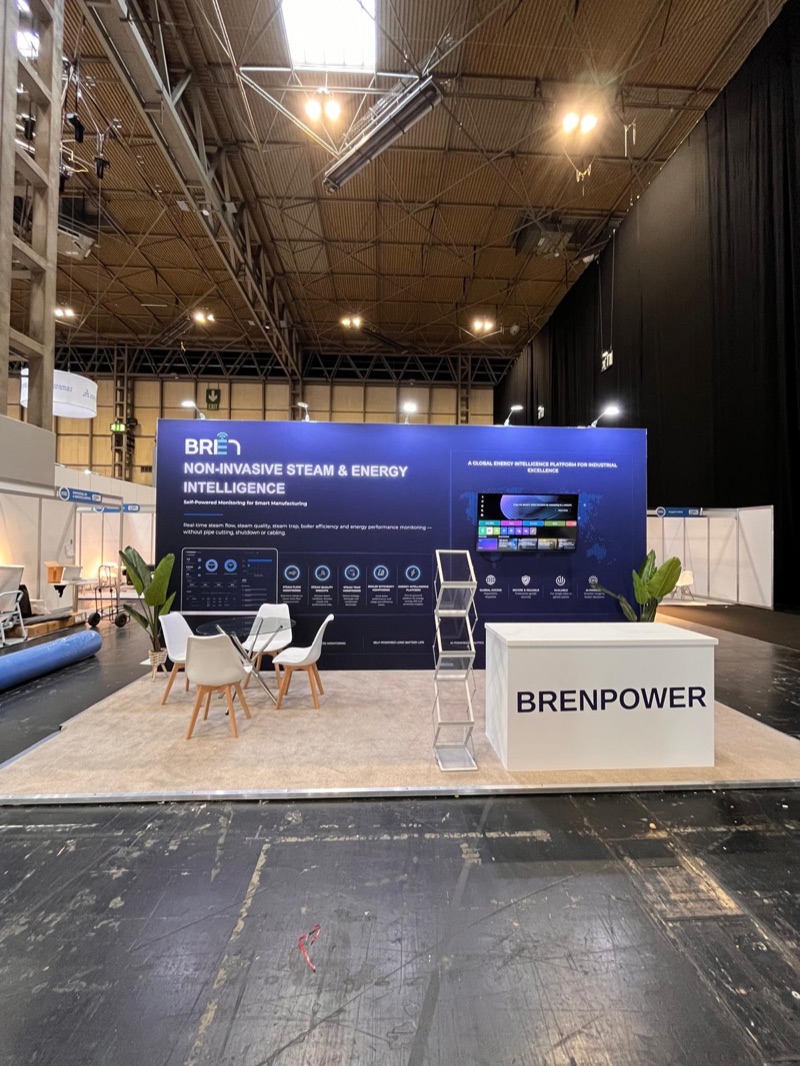
A 450 m² national pavilion for Government of Türkiye at London Tech Week, holding 55 companies on one DUM FLEX™ frame. A 54 m² technology stand for Questel at the INTA Annual Meeting. A 45 m² stand for EKA Elevator at UK Construction Week London. An 18 m² product stand for Bren Power at Smart Manufacturing Week. Four different sizes, four different industries, the same reusable structure underneath.
What we mean by sustainable, and what we do not claim
Sustainability in exhibition stands gets used loosely. We keep our part of it narrow and provable: how a stand is built, where it is built, and what happens to it once the show ends.
Few claims, and a brief that decides
We will not describe a stand as zero-waste or carbon-neutral, and we do not publish a sustainability certification: those are not claims we can stand behind project by project. What we can show you is a reusable frame, SEG graphics that can go back up, and a dismantle that was planned before the build started. Our full approach, outside the scope of a single project, is set out on our sustainability page.
At the discovery stage we ask where sustainability sits against your other priorities, alongside budget, design and the brand. That answer, more than the floor space, is what points us toward DUM FLEX™ or a custom wooden build, and sometimes a mix of the two on the same stand.
A reusable exhibition stand frame that goes out again on the next project
DUM FLEX™ is built on an engineered aluminium frame that is Dum Event property, not yours or ours for one show only.
Stock, not a one-off build
When a show closes, the frame behind a DUM FLEX™ stand comes down, goes back into our stock and goes out again on the next project. Compared with an equivalent one-off wooden build, that leaves a lot less single-use timber in the skip after the show. The 450 m² pavilion at London Tech Week and the 18 m² stand for Bren Power at Smart Manufacturing Week were both built on this same reusable system.
Graphics that can go back up
The walls are finished in SEG fabric graphics rather than printed board. If your next show uses the same dimensions and design, we will assess whether the graphics printed for this one can be used again: printed once, seen twice, rather than reprinted from scratch for every edition.
Production kept close to the show, managed from London
A stand that is built near the venue it is going to is a stand that does not cross a continent on a truck to get there.
Regional workshops, one project team
Every project is designed and managed from London, but the build itself runs through controlled workshops in Hannover, Poznan, Dubai and Riyadh, as close to your venue as the show allows. That routing is a design-stage decision, made when we work out where the stand will travel and how far, not something bolted on after the drawings are approved.
One team, start to finish
The same project manager who runs the brief and the design is on site for the build and the dismantle, so the sustainable exhibition stand design decisions made in the brief are the ones that actually get built, in the market they were planned for.
Bespoke wooden stands: a planned dismantle, not an afterthought
Not every brief fits a modular frame. Bespoke, in custom wooden construction, stays the right answer when the form or the finish is the concept, and it carries a different waste profile, which we plan for rather than ignore.
Recovery is part of the scope
Dismantle and site exit sit in our scope from day one, not as an afterthought once the show is over. For a bespoke build, salvage and disposal of the structure are planned per project, market and venue, so you know what happens to the stand before build-up has even started.
A different profile
A custom wooden stand built to be used for several editions and dismantled with a plan carries its own sustainability profile, separate from a modular frame used once. We talk through which one fits your brief at the discovery stage, so the construction approach matches your priorities from the start.
An exhibition stand builder producing close to your show
Dum Event is a London-led exhibition stand design and build company, built on 17+ years of industry experience and 250+ projects delivered.
Design and project management sit in London; the build runs through regional workshops close to the show, in the UK, Europe and the Middle East. Tell us where sustainability sits on your list of priorities at the brief stage, and we will recommend what genuinely fits, in DUM FLEX™, Bespoke, or a mix of the two.
Start with a brief →Sustainable exhibition stands: the questions we get asked
Does a sustainable exhibition stand cost more?
It depends on the build approach rather than on asking for a lower-waste stand specifically. DUM FLEX™ and bespoke are both quoted from the brief, the same way any stand is.
Can the graphics from our last stand be reused?
Often, yes. If the dimensions and design stay the same for your next show, we will assess whether the SEG graphics we printed before can go back up rather than being reprinted.
What happens to the stand after the show?
For DUM FLEX™, the frame is recovered and returns to our stock for the next project. For bespoke builds, salvage and disposal are planned per project, market and venue before build-up starts.
Is this the same as an eco-friendly exhibition stand package?
No. We do not sell a fixed eco display product off the shelf. We design and build a custom exhibition stand for your brief, and reuse is built into the structure and the production approach rather than sold as an add-on.
Do you publish a carbon or zero-waste certification?
No. We do not make zero-waste or carbon-neutral claims, and we have not published a sustainability certification. If your own reporting needs a specific environmental claim about the stand, tell us at the brief stage and we will confirm what we can and cannot support.
Is bespoke ever the right choice if waste is a priority?
Yes, when the design genuinely needs custom wooden construction. The waste reduction then comes from a planned dismantle and recovery rather than from a reusable frame, and we plan that at the same brief stage.