What goes into exhibition stand graphics
Exhibition stand graphics are the printed and illuminated surfaces that carry your brand on the stand: fabric and rigid panels, backlit walls, floor vinyl and signage, chosen to suit the structure underneath them and produced to the sizes, files and deadlines a trade show build actually runs on. Below is how we choose the material, what we need in the artwork file, and when it has to land with us so the stand underneath it is finished on time.
Send us your artwork brief →Published 20 October 2026
- Stands where the graphics were part of the build, not an afterthought
- The structure decides what the graphic can be
- Fabric, SEG, vinyl and lightboxes: picking the finish
- What we need from you before artwork goes to print
- Keeping each exhibitor identifiable inside one pavilion
- When the artwork needs to land with us
- Designed, printed and fitted under one programme
- Exhibition stand graphics: the questions we get asked
Stands where the graphics were part of the build, not an afterthought
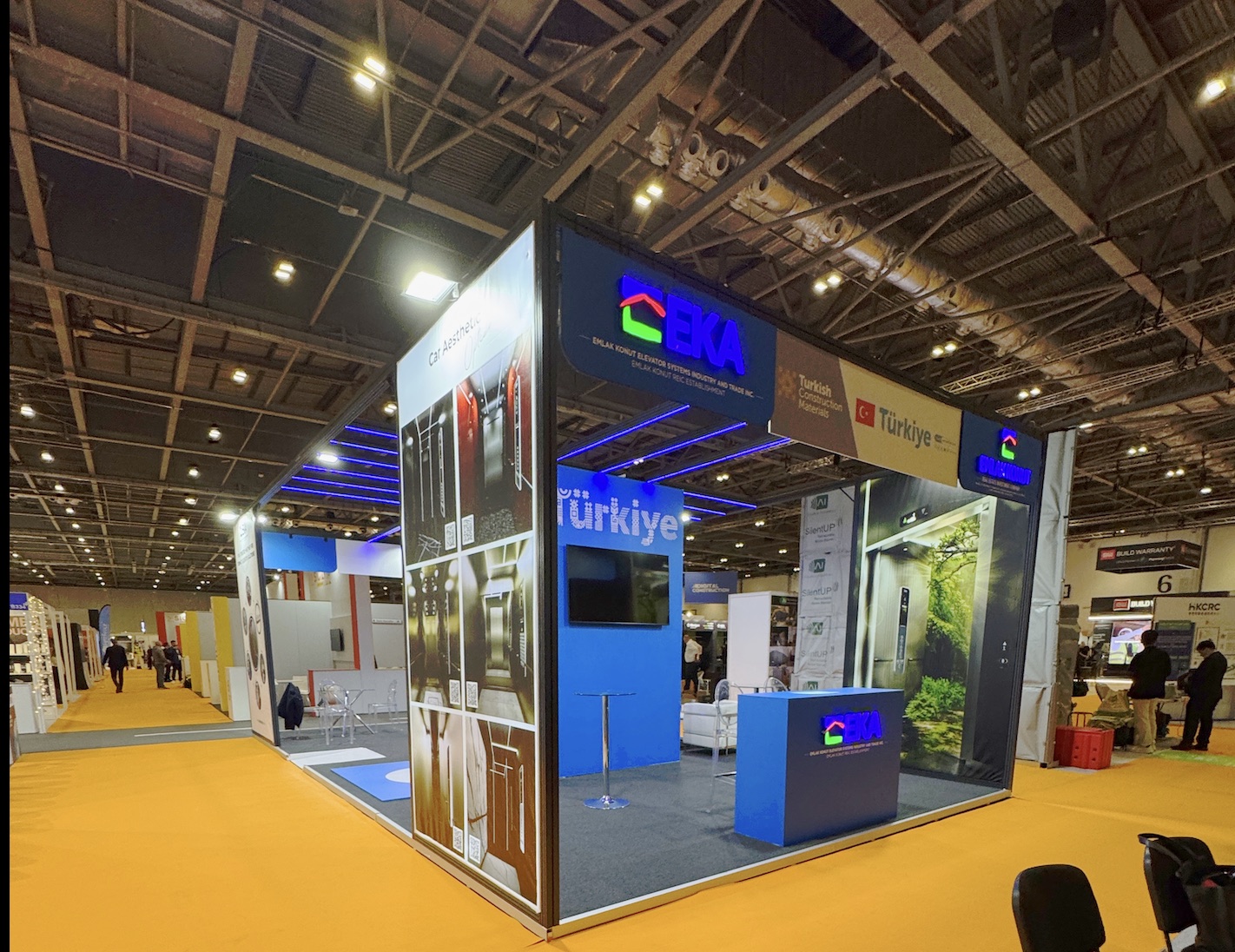
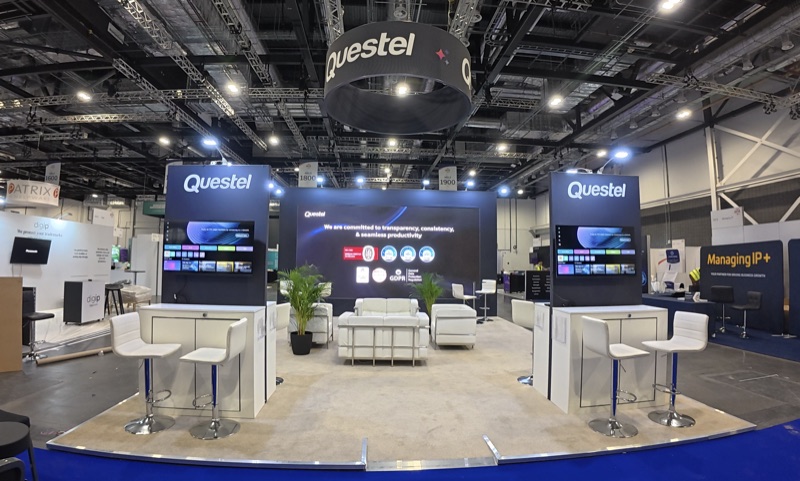
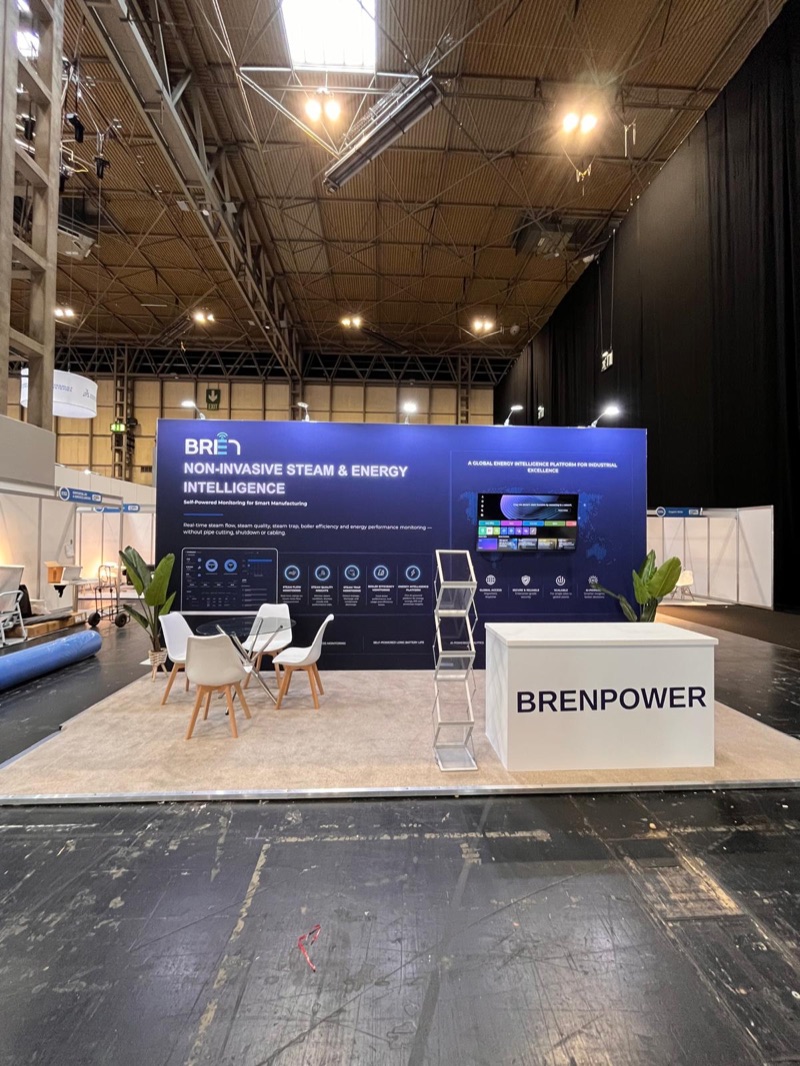
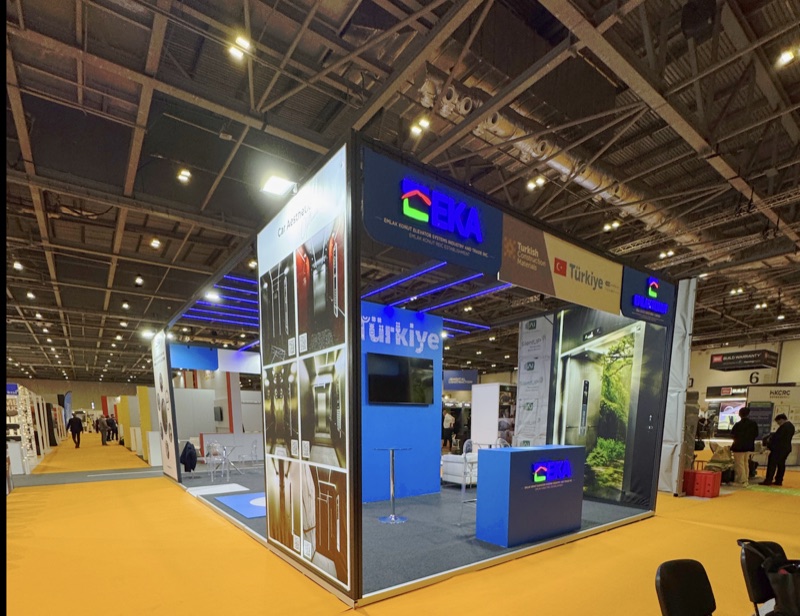
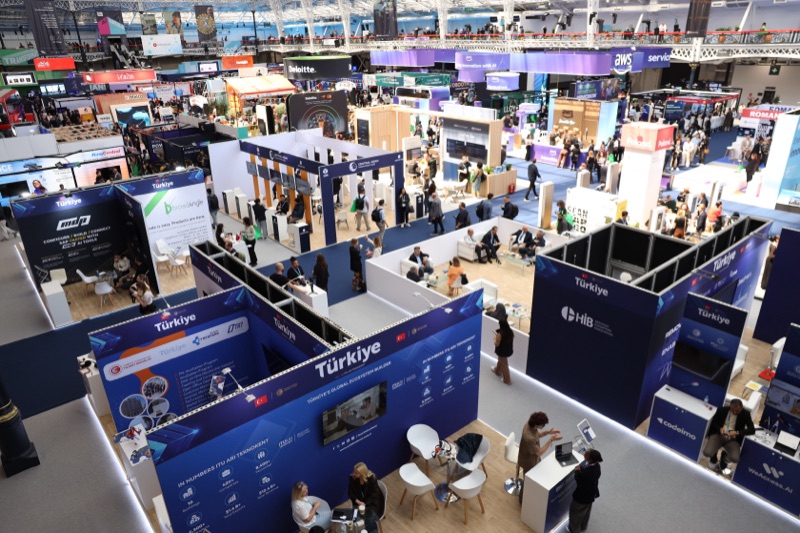
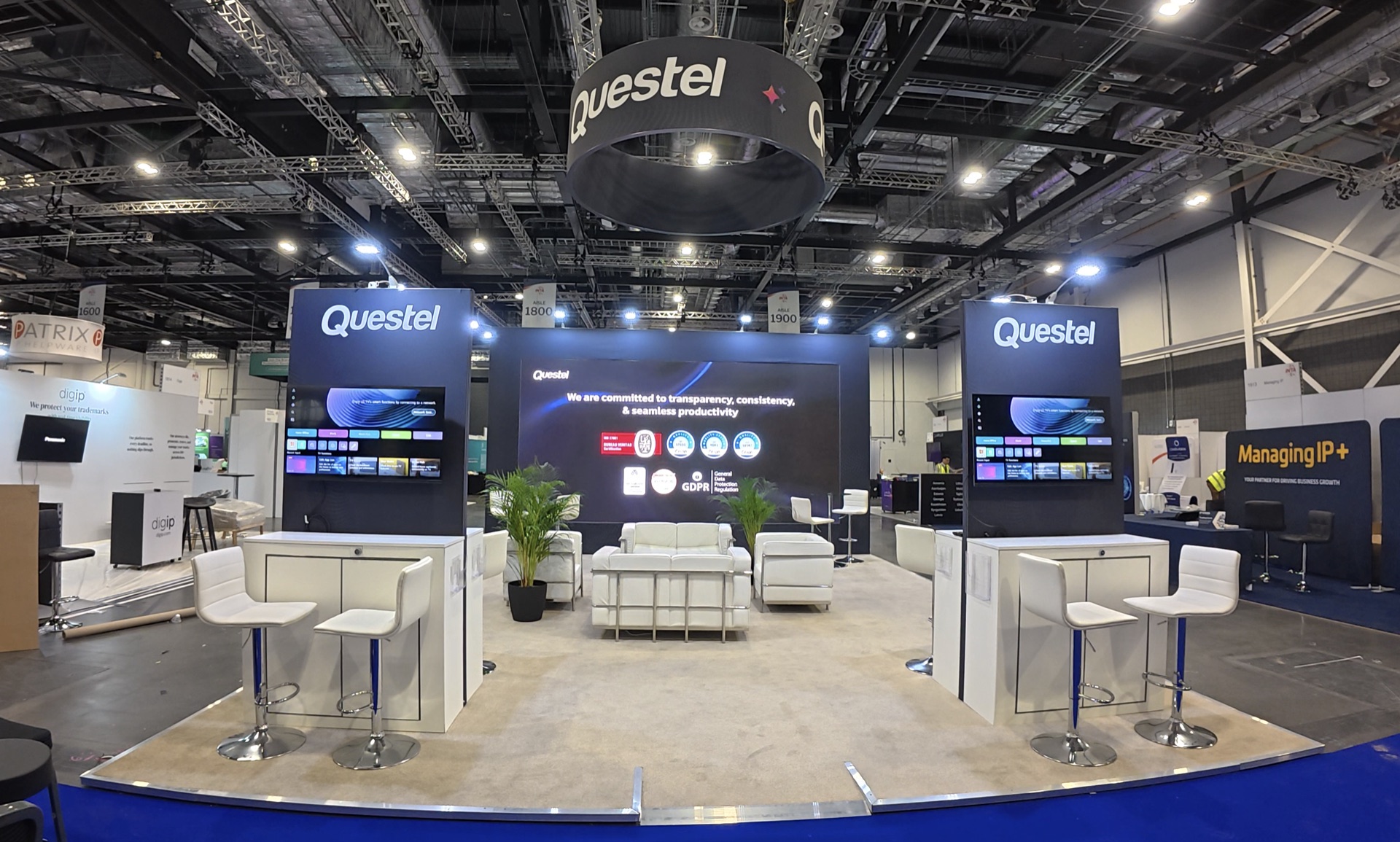
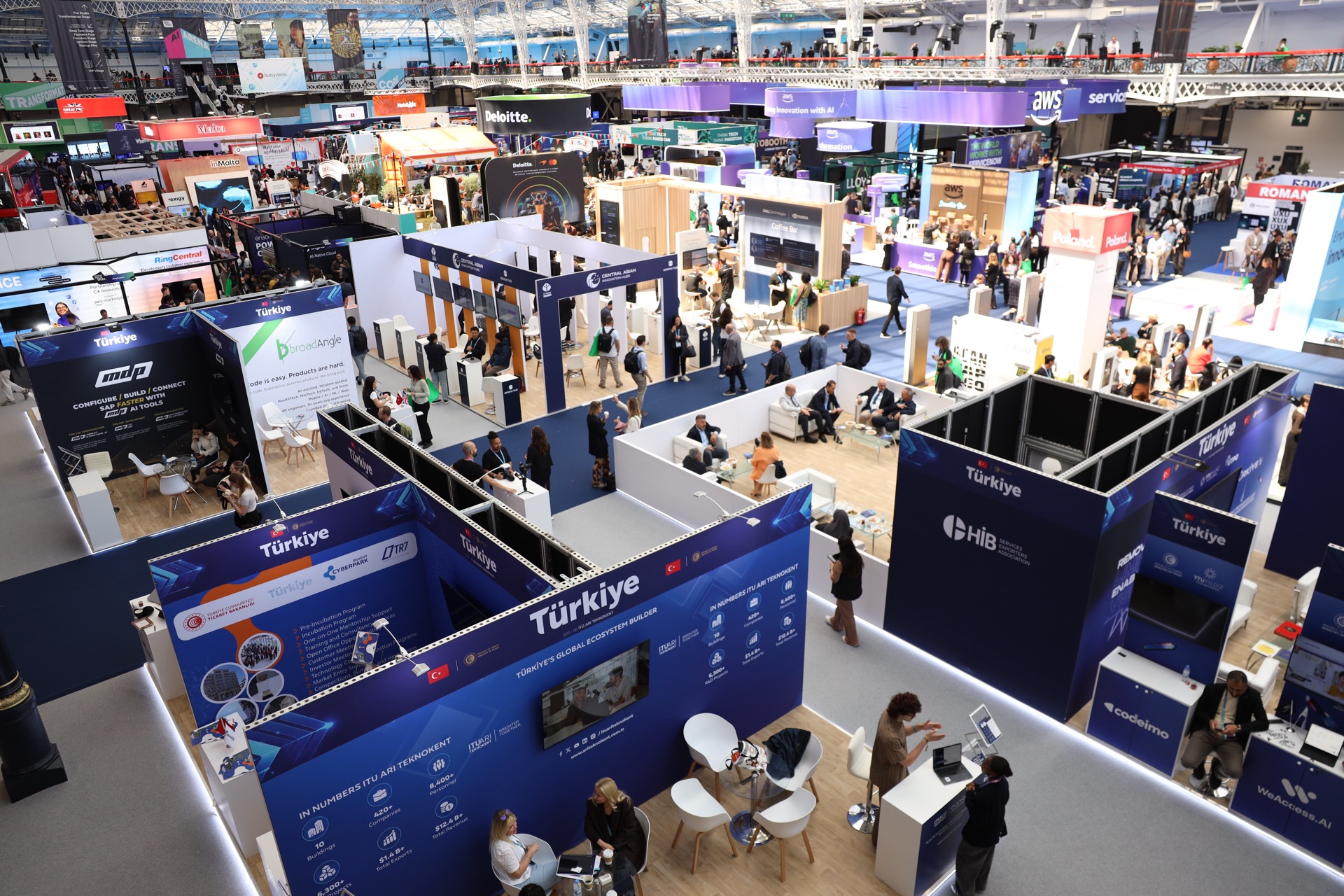
Four DUM FLEX™ projects where graphics and lighting were coordinated as part of the same programme as the structure: a technology stand for Questel at ExCeL, a product-presentation stand for Bren Power at the NEC, an illuminated stand for EKA Elevator at ExCeL, and a 450 m² shared pavilion for the Turkish Startup Pavilion at London Tech Week.
The structure decides what the graphic can be
A graphic is only ever as good as the surface it sits on, so the first decision is not the artwork, it is the stand it has to dress.
Panels, frames and painted walls take different graphics
An organiser-supplied shell scheme gives you flat panels cut to a fixed size, so the graphic is a printed sheet applied to a wall that is already standing; what that package includes and what it leaves to you is covered on our shell scheme vs space only page. A DUM FLEX™ stand is built the other way round: the frame and the tensioned fabric graphic are designed together, so the panel sizes, the seams and the cut-outs for lighting or a screen are set by the layout rather than by someone else's structure. A bespoke, custom wooden build sits between the two, with graphics applied to purpose-made surfaces that can be curved, recessed or lit from behind in ways a standard panel cannot.
Why we coordinate graphics as part of the build, not after it
On our own projects, graphics and lighting are part of the same programme as the structure, not a separate order that arrives once the stand is already standing. Questel's technology stand at INTA Annual Meeting and Bren Power's stand at Smart Manufacturing Week were both quoted and run as design, technical and venue coordination, production, graphics and AV coordination, logistics and installation in one project. That sequencing matters because a graphic designed against the real panel sizes and the real lighting plan fits the first time; one designed against a guess at the structure usually needs a reprint.
Fabric, SEG, vinyl and lightboxes: picking the finish
Most exhibition graphics fall into a handful of material families, and each one suits a different part of the stand rather than one being simply better than the rest.
Tensioned fabric and SEG
Tensioned fabric, including silicone-edge graphic (SEG) systems, is stretched into an aluminium frame to give a smooth, flat surface with no visible join. It is light to ship, quick to fit and easy to re-tension on site, which is why it is the standard finish on a DUM FLEX™ frame and on most backlit walls. It is less forgiving of very fine, small-scale text than a rigid panel, so copy that needs to read at close range is usually placed on a counter or a rigid insert rather than directly on the fabric.
Rigid panels and vinyl
Rigid board, usually foamex or a composite panel, holds a flat, printed or vinyl-wrapped surface and is the material behind most shell scheme graphics and reception counters. It is the right choice where the surface has to take knocks, carry a precise cut-out for a socket or screen, or sit on a surface with a profile fabric cannot follow, such as a curved reception desk or a floor-standing plinth.
Backlit and illuminated graphics
Lighting a graphic from behind lifts colour and makes a wall readable from further down a busy aisle than a surface-lit panel of the same size. EKA Elevator's stand at UK Construction Week in London used exactly that: open corners, illuminated branding and carefully positioned product graphics that kept a clear visitor route and a consistent identity across the stand. Backlighting asks more of the artwork, because colours shift once light passes through the material, so a proof under the actual lighting is worth the extra day it takes.
What we need from you before artwork goes to print
Large-format print behaves differently to anything designed for a screen or an A4 page, and most of the things that go wrong on site trace back to the file rather than the design.
Sizing, resolution and bleed
Artwork needs to be built at the actual output size, or a known scale of it, because an image that looks sharp shrunk down on a laptop screen can print visibly soft once it is stretched across a three-metre wall. Most print studios work from images at roughly 100 to 150 dpi at full size and ask for a few millimetres of bleed around every edge so nothing white shows at the trim line; the exact figures depend on the viewing distance and the printer, so we confirm them against your specific panels rather than quoting a single rule for every stand.
File formats and colour
Print-ready PDF, AI or EPS files with embedded fonts and linked images travel through a print studio far more reliably than a JPEG, PNG or Word document, because the layered, vector original lets a studio correct a problem without going back to whoever built the file. Colour is the other common surprise: a design built in RGB, the colour space screens use, can shift once it is converted to CMYK for print, so brand colours worth getting exactly right are checked against a printed swatch before the full run goes ahead, not after.
Keeping each exhibitor identifiable inside one pavilion
A shared, multi-exhibitor pavilion asks something different of the graphics: one identity at the entrance, and several more inside it that still have to read as their own.
One system, several voices
The Turkish Startup Pavilion at London Tech Week ran to 450 m² and carried a consistent visual system across the whole structure while individual company graphics and content remained clearly identifiable company by company. That is a graphics brief as much as a layout one: a shared colour and signage language at the entrance and in the circulation space, with a defined panel or zone reserved for each company's own branding so nobody's identity gets lost inside someone else's. How the floor space itself gets divided between companies on a shared stand is covered on our exhibition stand ideas page; this is the graphics side of that same brief.
When the artwork needs to land with us
Graphics are usually the last thing finished and the first thing missed on a tight show schedule, because the structure can be planned before the final brand assets exist.
There is no single universal deadline, because it depends on the material, the quantity of panels and how much proofing the design needs, but the pattern is the same on every job: the earlier finished, print-ready artwork reaches us relative to build week, the more time there is to proof it against the real panel sizes and the real lighting before anything is cut. Logos, approved copy and a locked stand layout are what we ask for first, because artwork built against a layout that is still moving is artwork that gets built twice. On projects where graphics, AV and installation are coordinated as one programme, that proofing step is already built into the schedule rather than squeezed in at the end.
Tell us your show date →Designed, printed and fitted under one programme
Exhibition stand graphics can be bought separately from the stand, and sometimes that is the right call; on our own projects they usually are not.
Why we keep it under one roof
Where we design and build the stand, graphics and AV are handled as part of the same project rather than handed to a separate supplier you have to brief twice. That means the person drawing the stand also owns the panel sizes the artwork is built to, and the installation team fitting the graphics on site is the same team that built the frame, so a measurement error or a late change is caught before it reaches the print studio rather than after. If you already have artwork, finished brand assets or a printer you work with elsewhere, we can work from that instead; the coordination point is the same either way, and it is worth raising at brief stage rather than once the stand is in build.
Exhibition stand graphics: the questions we get asked
What file format do you need for exhibition stand graphics?
Print-ready PDF, AI or EPS with embedded fonts and linked images, built at full output size or a known scale. A JPEG or PNG can work for a small panel if the resolution is high enough, but a layered, vector original lets us fix a problem without going back to whoever built the file, so we ask for that where the design allows it.
Can I supply my own artwork?
Yes. If you already have finished brand assets or approved artwork, send it with the panel sizes or the stand drawing and we will assess applying it to the stand as part of the build. We still proof it against the real panel sizes and, for anything backlit, under the actual lighting, before the full run goes ahead.
What is the difference between SEG, vinyl and lightbox graphics?
SEG (silicone-edge graphic) is tensioned fabric stretched into a frame for a smooth, flat finish, used on most DUM FLEX™ walls. Vinyl is a printed or wrapped rigid panel, used where a surface needs to take knocks or carry a precise cut-out. A lightbox is either material lit from behind, which lifts colour and legibility from further down the aisle but needs the artwork proofed under light rather than daylight.
Do graphics work differently on a shell scheme than on a DUM FLEX or bespoke stand?
Yes. On a shell scheme the graphic is a printed panel applied to a wall the organiser already built, cut to that show's fixed panel sizes. On DUM FLEX™ or bespoke the frame or the structure and the graphic are designed together, so panel sizes, seams and lighting cut-outs follow the layout rather than someone else's structure. What a shell scheme package includes is covered on our shell scheme vs space only page.
Can several companies share one set of graphics on a pavilion stand?
Yes, and it is a different brief to a single-brand stand. The Turkish Startup Pavilion at London Tech Week carried one consistent visual system across 450 m² while each company's own graphics stayed clearly identifiable, which means a shared language at the entrance and in circulation space, plus a defined panel or zone reserved for each exhibitor.
How far in advance do you need finished artwork?
It depends on the material and how many panels there are, but logos, approved copy and a locked stand layout should come first, because artwork built against a layout that is still moving usually gets built twice. The earlier print-ready files land relative to build week, the more time there is to proof them against the real panels and lighting before anything is cut.
Do you produce exhibition stand graphics in-house or use a supplier?
Where we design and build the stand, graphics and AV are coordinated as part of the same programme, so the person who drew the panel sizes also owns the artwork brief and the same team fits it on site. If you already work with your own printer or have existing artwork, we can work from that instead.